Use Matrix
Pick the usable route
Use this as a quick navigation board: scan each fight or build decision, then jump to the full breakdown and source frames below.

What the Sigil solves
Sigil of the Dead is not just a flashy late unlock. Hades Aid can let you leave unsafe pressure, reposition behind a target, avoid a dangerous sequence, or set up a cleaner burst window. Its value depends on using invisibility before the room becomes desperate, not as a panic button after every other plan has failed.

Call slot tradeoff
Because Sigil changes the Call plan, compare it against the Aid your build would otherwise use. Zeus, Artemis, Aphrodite, Athena, or Dionysus Aid can all support different routes. Pick Sigil when invisibility and control matter more than another god call payoff.
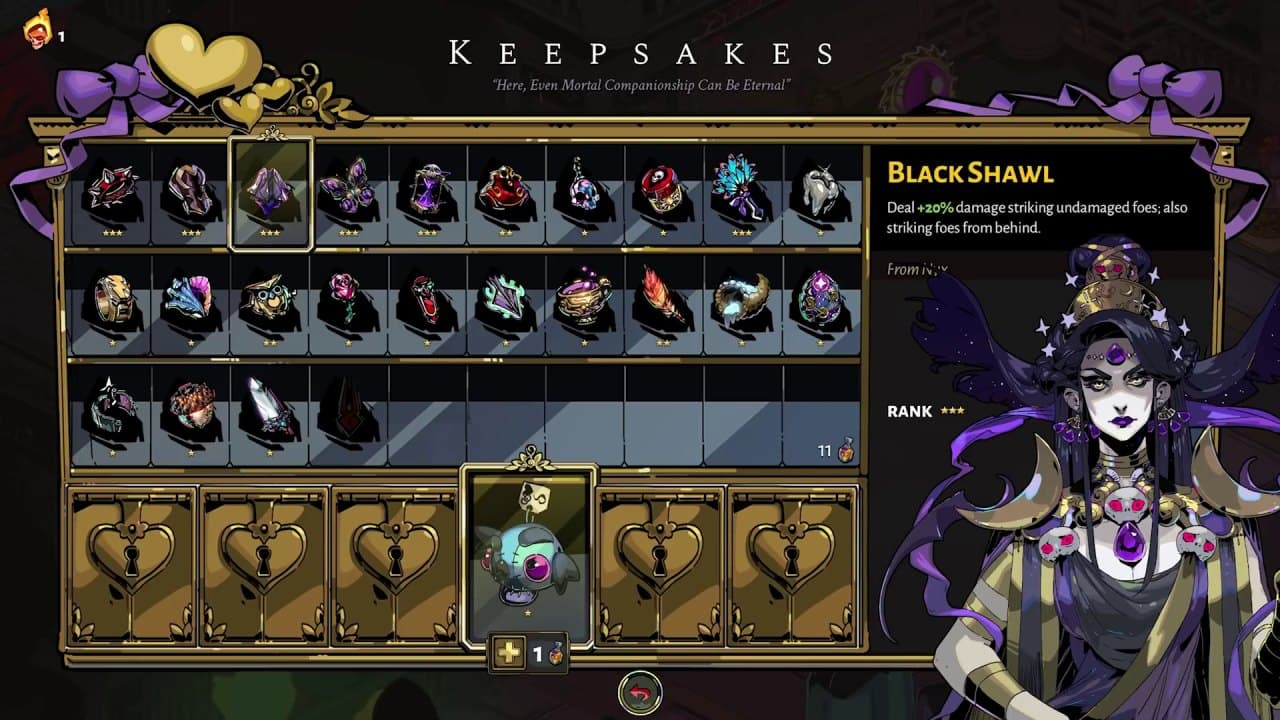
How to use this page in a run
Use this page as a quick decision aid before the next chamber or boss attempt. First identify the immediate problem, then pick the recommendation that solves that problem with the least extra execution. If the page is about a weapon or resource, treat it as a route choice rather than a trivia entry: the goal is a more stable run, not just knowing the item exists.
Quick Verdict
Use Sigil of the Dead when you want Hades Aid for invisibility windows, safe repositioning, or controlled burst. It is a late-game utility pick, not a first-clear foundation.
Requires late relationship progression before it becomes available.
Changes the Call slot, so it competes with Olympian Aid choices.
Best when invisibility is used to reposition or create a planned damage window.
Pre-Run Checklist
How to test Sigil of the Dead in the next run
Use invisibility to create position, not to justify staying too long.
Open
Confirm whether Sigil of the Dead fits this route segment
Requires late relationship progression before it becomes available.
Check
What the Sigil solves
Swap
Re-check the next biome before swapping
Use for late-game routing, Call-slot experimentation, or builds that value safe repositioning more than raw Olympian Aid damage.
Check
Next read: Hades
Cost
Do not pay opportunity cost for a mismatched reward
Forgetting that choosing Sigil also means giving up another god Aid.
Check
Next read: Hades Boon and Build Planning Guide
Player Intent Router
Choose the section that matches your current wall
High-retention guide pages do not force every player to read linearly. They help the player name the problem, act on it, then continue into the next useful page.
01 · Opening pick
You are deciding whether to start with Sigil of the Dead
A keepsake is a route switch, not permanent equipment. First identify whether it solves god targeting, survival, economy, boss protection, or late utility.
Page action
Requires late relationship progression before it becomes available.
02 · Biome swap
You cleared a biome and can change keepsakes
Do not keep the same keepsake by habit. Ask whether the next stretch threatens normal rooms, the boss, resources, or a missing core boon.
Page action
Use for late-game routing, Call-slot experimentation, or builds that value safe repositioning more than raw Olympian Aid damage.
03 · Trap check
The keepsake looks strong, but may not fit this route
Many keepsakes are powerful only inside a matching plan. Use the mistake notes to spot when the reward is not worth the opportunity cost.
Page action
Forgetting that choosing Sigil also means giving up another god Aid.
Keepsake Route Check
Do not treat the keepsake as permanent gear
This keepsake currently reads as a utility tool. The question is not whether it is good in isolation, but whether it solves the most expensive problem in this run.
Use these three checks to decide whether to equip it, when to swap away, and what stronger alternative it may be crowding out.
01 · Equip window
When Sigil of the Dead belongs in the run
Equip it when its special effect solves the run’s current job better than a generic god, economy, or safety keepsake.
Page evidence
Requires late relationship progression before it becomes available.
02 · Swap point
When to move off it
Swap when the effect has done its job or when the next biome asks for a clearer answer: damage, safety, money, or boss control.
Page evidence
Changes the Call slot, so it competes with Olympian Aid choices.
03 · Opportunity cost
What this keepsake replaces
The cost is certainty. Utility keepsakes can be powerful, but they need a reason; without a route plan, simpler keepsakes are easier to convert into value.
Page evidence
Best when invisibility is used to reposition or create a planned damage window.
Field Guide
How to use this page
Sigil of the Dead should not be treated as a trivia entry. Use it as a route decision before the next run: identify the current wall, then choose the lowest-execution answer that solves that wall.
If the problem is survival, prioritize safer spacing, keepsakes, Mirror choices, or weapon rhythm. If the problem is damage, identify which button carries the build. If the problem is resources, spend on upgrades that improve several future runs instead of only the current attempt.
Screenshots and video references are support material: they help you read tells, spacing, reward locations, or build direction. The written conclusions are the part to carry into the run.
Before entry
Use this Keepsake page to name the real job first: survival, damage, resources, or route clarity. A specific job keeps the run from being pulled off course by rarity, flashy clips, or tempting side rewards.
During the fight
Compress the advice into one action rule: wait for the tell, preserve spacing, clear adds first, take the core boon, or leave before greed damage begins. Good guidance should survive a messy screen.
After failure
Do not only ask whether the damage was high enough. Ask where health started disappearing, which reward did not serve the route, and whether the next run needs a different keepsake, Mirror setup, aspect, or starting god.
After reading Sigil of the Dead, do not jump straight to an unrelated entry. Test the advice in one run by changing a single variable: starting keepsake, primary damage button, boss phase plan, resource spending order, or the positioning shown in the reference frames. That makes the next review cleaner because you can tell which change actually improved the route.
If you only remember one rule: Sigil of the Dead is useful because it reduces hesitation in the next run. Anything that helps you decide when to attack, retreat, reroute, or preserve resources is what actually improves clear consistency.
A database page works best when it turns small decisions into a stable route. Read this page, follow the related entries, then test the idea in one escape attempt so the guide becomes practice rather than trivia.
Takeaways
- 01
Requires late relationship progression before it becomes available.
- 02
Changes the Call slot, so it competes with Olympian Aid choices.
- 03
Best when invisibility is used to reposition or create a planned damage window.
Strategy Path
What to read next
Do not leave Sigil of the Dead as an isolated note. Follow the route below to turn one useful answer into a complete escape plan.
01 · Solve the wall
Hades
After Sigil of the Dead, use Hades to check the next decision layer: Stay outside spin range, clear skull casts before they detonate, and never spend all dashes entering melee. Phase two is won by patience, not by racing the health bar.
02 · Build the route
Hades Boon and Build Planning Guide
After Sigil of the Dead, use Hades Boon and Build Planning Guide to check the next decision layer: A good Hades build starts by deciding which button deals damage. Then you pick gods that scale that button, use keepsakes to control the first god, and avoid taking shiny boons that do not help the run’s core job.
03 · Build the route
Hades Nectar and Keepsake Priority Guide
After Sigil of the Dead, use Hades Nectar and Keepsake Priority Guide to check the next decision layer: Early Nectar is best spent unlocking useful first keepsakes. Survival keepsakes help you see more bosses; god keepsakes help you build intentionally once you understand what your weapon wants.
04 · Plan upgrades
Nectar
After Sigil of the Dead, use Nectar to check the next decision layer: Give early Nectar to characters whose keepsakes solve immediate problems: Skelly for survival, Cerberus for health, and Olympian gods for boon targeting.
Change one variable at a time along this path: setup first, boon route second, boss phase handling last. That makes it easier to tell which adjustment actually improved consistency.
Run Study Board
Turn the guide into one playable review loop
This page compresses 3 source references and gameplay frames into three steps: watch, apply, and review.
01 · WatchRead the danger in the frame first
Sigil of the Dead is not just a flashy late unlock. Hades Aid can let you leave unsafe pressure, reposition behind a target, avoid a dangerous sequence, or set up a cleaner burst window. Its value depends on using invisibility before the room becomes desperate, not as a panic button after every other plan has failed.
Frame action
Sigil changes the Call plan into a Hades Aid utility route.
02 · ApplyTurn the advice into one next-run change
Use for late-game routing, Call-slot experimentation, or builds that value safe repositioning more than raw Olympian Aid damage.
Frame action
Requires late relationship progression before it becomes available.
03 · ReviewReview the most expensive repeated mistake
Forgetting that choosing Sigil also means giving up another god Aid.
Frame action
Keepsake pages are stronger when readers can see the item as a route switch, not permanent equipment.
Tactical Drill Table
Convert Sigil of the Dead into four playable checks
This is not an encyclopedia summary. It is a next-run drill card: what to look for, what to do, what to avoid, and which page should fill the next gap.
01 · Observe
Decide whether Sigil of the Dead is an opener, swap, or insurance
If you see
The keepsake looks good, but you cannot name which part of the route it solves.
Do this
Requires late relationship progression before it becomes available.
02 · Commit
Equip it only when the payoff window is real
If you see
Sigil of the Dead is not just a flashy late unlock. Hades Aid can let you leave unsafe pressure, reposition behind a target, avoid a dangerous sequence, or set up a cleaner burst window. Its value depends on using invisibility before the room becomes desperate, not as a panic button after every other plan has failed.
Do this
Use for late-game routing, Call-slot experimentation, or builds that value safe repositioning more than raw Olympian Aid damage.
Do not
Forgetting that choosing Sigil also means giving up another god Aid.
Next: Hades Boon and Build Planning Guide03 · Avoid
Check what stronger tool it crowds out
If you see
The build lacks a core boon, health is low, or the next boss threat is more direct.
Do this
Changes the Call slot, so it competes with Olympian Aid choices.
Do not
Do not pay opportunity cost for an effect that does not solve the current problem.
Next: Hades Nectar and Keepsake Priority Guide04 · Pivot
Re-plan after each biome
If you see
The biome ended and the next stretch asks a different question.
Do this
Best when invisibility is used to reposition or create a planned damage window.
Build Synergy Board
Connect this page to a full route
Readers often leave when the page does not answer what to pair next. This board connects the advice to gods, keepsakes, weapons, resources, and the next guide.
Opening route
Decide whether Sigil of the Dead belongs in chamber one
Pair with
Hades
A keepsake is a routing switch. It should start a god plan, add survival, create economy, or stabilize a known danger.
Page check
Requires late relationship progression before it becomes available.
Biome swap
Compare value again after each biome
Pair with
Hades Boon and Build Planning Guide
Tartarus, Asphodel, Elysium, and Styx ask different questions. The best previous answer may become the wrong next answer.
Page check
Use for late-game routing, Call-slot experimentation, or builds that value safe repositioning more than raw Olympian Aid damage.
Opportunity cost
Make sure it is not crowding out a more urgent tool
Pair with
Hades Nectar and Keepsake Priority Guide
A strong keepsake is not automatically correct. It has to solve the most expensive problem in this specific run.
Page check
Forgetting that choosing Sigil also means giving up another god Aid.
Route Data Table
Decide where Sigil of the Dead belongs in the route
A keepsake is a routing switch, not decoration. The table separates chamber-one value, biome swaps, and opportunity cost so players do not use a good keepsake at the wrong time.
Table use
Re-check this after each biome instead of assuming the previous answer still fits.
| Timing | Equip reason | Swap trigger | Cost |
|---|---|---|---|
| Tartarus opener | Requires late relationship progression before it becomes available. | Sigil of the Dead is not just a flashy late unlock. Hades Aid can let you leave unsafe pressure, reposition behind a target, avoid a dangerous sequence, or set up a cleaner burst window. Its value depends on using invisibility before the room becomes desperate, not as a panic button after every other plan has failed. | Forgetting that choosing Sigil also means giving up another god Aid. |
| Biome swap | Use for late-game routing, Call-slot experimentation, or builds that value safe repositioning more than raw Olympian Aid damage. | Because Sigil changes the Call plan, compare it against the Aid your build would otherwise use. Zeus, Artemis, Aphrodite, Athena, or Dionysus Aid can all support different routes. Pick Sigil when invisibility and control matter more than another god call payoff. | Using invisibility after panic has already ruined spacing instead of using it to plan the next window. |
| Late-run slot | Hades | Best when invisibility is used to reposition or create a planned damage window. | Do not keep forcing the same problem without a review signal. |
People Also Ask
Sigil of the Dead FAQ
These answers are for search visitors and stuck players: resolve the most common decisions first, then continue into the deeper breakdown.
Q1Should I equip Sigil of the Dead at the start of a run?
+
Use Sigil of the Dead when you want Hades Aid for invisibility windows, safe repositioning, or controlled burst. It is a late-game utility pick, not a first-clear foundation. Equip it early only when it solves the first routing problem in the run; otherwise compare it again after the biome.
Q2When should I swap away from Sigil of the Dead?
+
Sigil of the Dead is not just a flashy late unlock. Hades Aid can let you leave unsafe pressure, reposition behind a target, avoid a dangerous sequence, or set up a cleaner burst window. Its value depends on using invisibility before the room becomes desperate, not as a panic button after every other plan has failed. After each biome, re-check the next danger source instead of assuming the previous answer still fits.
Q3How do I choose between Sigil of the Dead and another keepsake?
+
Use for late-game routing, Call-slot experimentation, or builds that value safe repositioning more than raw Olympian Aid damage. The right keepsake is not the strongest in a vacuum; it is the one that solves the most expensive problem in this run.
Q4What mistake makes Sigil of the Dead weaker than it should be?
+
Forgetting that choosing Sigil also means giving up another god Aid. Using invisibility after panic has already ruined spacing instead of using it to plan the next window.
Best Picks Breakdown
Actionable notes by section
Entry 1
What the Sigil solves
Sigil of the Dead is not just a flashy late unlock. Hades Aid can let you leave unsafe pressure, reposition behind a target, avoid a dangerous sequence, or set up a cleaner burst window. Its value depends on using invisibility before the room becomes desperate, not as a panic button after every other plan has failed.
Visual Note
Late-game Aid control
Sigil changes the Call plan into a Hades Aid utility route.
Entry 2
Call slot tradeoff
Because Sigil changes the Call plan, compare it against the Aid your build would otherwise use. Zeus, Artemis, Aphrodite, Athena, or Dionysus Aid can all support different routes. Pick Sigil when invisibility and control matter more than another god call payoff.
Visual Note
Final boss discipline
Use invisibility to create position, not to justify staying too long.
Entry 3
How to use this page in a run
Use this page as a quick decision aid before the next chamber or boss attempt. First identify the immediate problem, then pick the recommendation that solves that problem with the least extra execution. If the page is about a weapon or resource, treat it as a route choice rather than a trivia entry: the goal is a more stable run, not just knowing the item exists.
- If survival is the problem, choose safety before damage.
- If the run lacks direction, choose one primary button or resource goal.
Visual Note
Keepsake routing reference
Keepsake pages are stronger when readers can see the item as a route switch, not permanent equipment.