Use Matrix
Pick the usable route
Use this as a quick navigation board: scan each fight or build decision, then jump to the full breakdown and source frames below.

Aspect direction
Nemesis is the clean damage pick for players who can keep attacking after Special. Arthur changes the weapon entirely: slower swings, stronger control, and a defensive aura that makes it easier to survive messy rooms. Zagreus aspect is fine for learning but is rarely the long-term reason to invest Titan Blood.
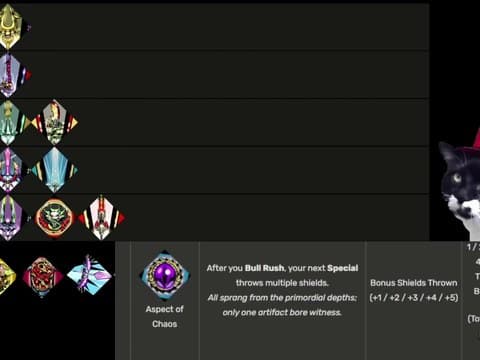
How to stop overcommitting
The Blade becomes safer when you treat every attack string as a question instead of a promise. Start with short dash-strike or attack windows, then leave before the enemy answers. If a boss is already turning toward you, cancel the idea and reset spacing. Good Blade play is less about permanent aggression and more about choosing the two seconds where melee is actually allowed.
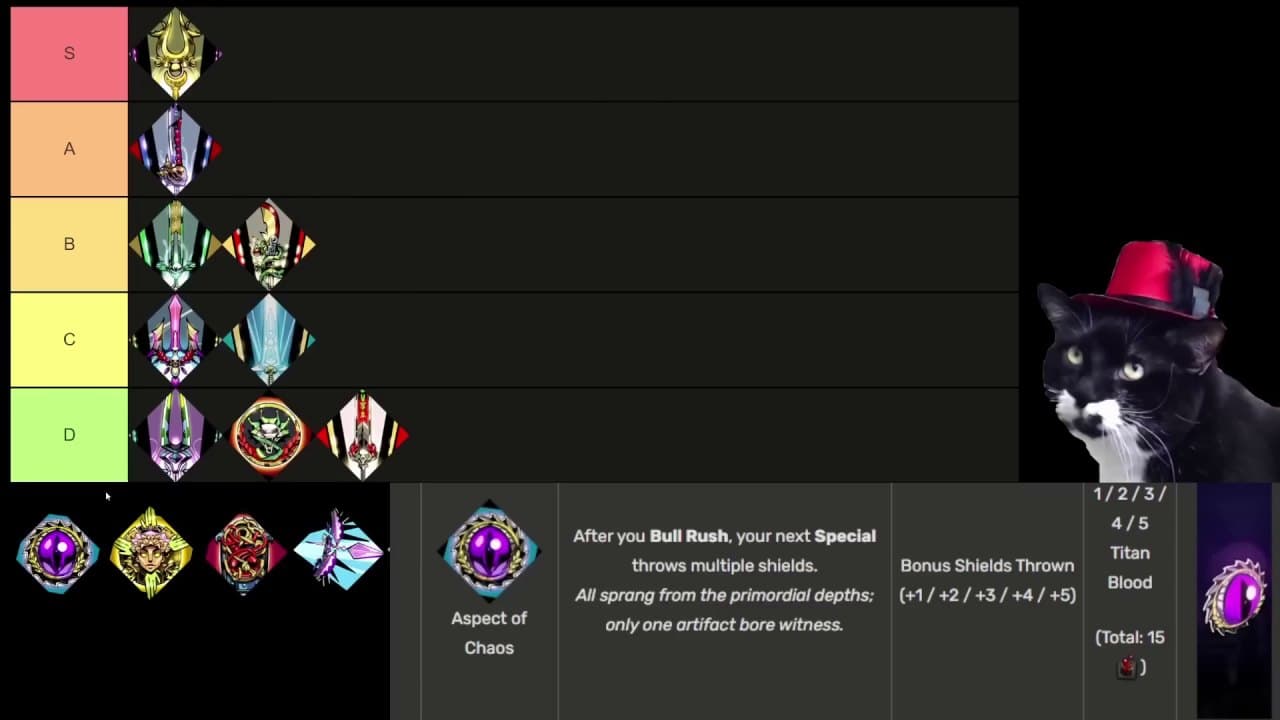
Aspect choice by learning goal
Nemesis is best when you want to practice crit uptime and clean attack windows. Poseidon is better when the run is Cast-focused and wants dislodged casts. Arthur is the comfort pick for players who want heavier hits, a slower rhythm, and a defensive zone that turns chaotic rooms into readable rooms.
Quick Verdict
Use Blade when you want to learn boss windows. Nemesis rewards crit-focused attack builds; Arthur trades speed for safety, aura control, and heavy hits.
Do not finish full attack strings inside boss danger.
Dash-strike is powerful but can become a bad habit.
Arthur wants patience and health, not frantic speed.
Pre-Run Checklist
How to test Stygian Blade in the next run
Compare Blade aspects by the job they give the run: Nemesis for crit windows, Poseidon for cast control, Arthur for slower safety.
Role
Give Stygian Blade one job before investing
Do not finish full attack strings inside boss danger.
Check
Aspect direction
Button
Fund the button that actually carries damage
Artemis attack, Aphrodite attack, Athena Dash, or Dionysus special depending on aspect.
Check
Next read: Best Hades Weapon Aspects for Consistent Clears
Risk
Fix consistency before judging the ceiling
Treating Arthur like a fast sword.
Check
Next read: Hades Boon and Build Planning Guide
Player Intent Router
Choose the section that matches your current wall
High-retention guide pages do not force every player to read linearly. They help the player name the problem, act on it, then continue into the next useful page.
01 · Weapon fit
You want to know whether Stygian Blade fits the run
Judge the weapon by the job it solves: safety, burst, range, status triggers, or resource routing. Do not choose only by tier-list strength.
Page action
Do not finish full attack strings inside boss danger.
02 · Main button
Your build is spreading damage across too many ideas
A weapon page should decide which button gets investment. Once the main button is clear, boons, hammers, and keepsakes have direction.
Page action
Artemis attack, Aphrodite attack, Athena Dash, or Dionysus special depending on aspect.
03 · Consistency fix
The weapon feels strong, but clears are unstable
That usually means spacing, boss windows, or boon routing are not serving the weapon rhythm. Change one variable before replacing the whole route.
Page action
Treating Arthur like a fast sword.
Field Guide
How to use this page
Stygian Blade should not be treated as a trivia entry. Use it as a route decision before the next run: identify the current wall, then choose the lowest-execution answer that solves that wall.
If the problem is survival, prioritize safer spacing, keepsakes, Mirror choices, or weapon rhythm. If the problem is damage, identify which button carries the build. If the problem is resources, spend on upgrades that improve several future runs instead of only the current attempt.
Screenshots and video references are support material: they help you read tells, spacing, reward locations, or build direction. The written conclusions are the part to carry into the run.
Before entry
Use this Weapon page to name the real job first: survival, damage, resources, or route clarity. A specific job keeps the run from being pulled off course by rarity, flashy clips, or tempting side rewards.
During the fight
Compress the advice into one action rule: wait for the tell, preserve spacing, clear adds first, take the core boon, or leave before greed damage begins. Good guidance should survive a messy screen.
After failure
Do not only ask whether the damage was high enough. Ask where health started disappearing, which reward did not serve the route, and whether the next run needs a different keepsake, Mirror setup, aspect, or starting god.
After reading Stygian Blade, do not jump straight to an unrelated entry. Test the advice in one run by changing a single variable: starting keepsake, primary damage button, boss phase plan, resource spending order, or the positioning shown in the reference frames. That makes the next review cleaner because you can tell which change actually improved the route.
If you only remember one rule: Stygian Blade is useful because it reduces hesitation in the next run. Anything that helps you decide when to attack, retreat, reroute, or preserve resources is what actually improves clear consistency.
A database page works best when it turns small decisions into a stable route. Read this page, follow the related entries, then test the idea in one escape attempt so the guide becomes practice rather than trivia.
Takeaways
- 01
Do not finish full attack strings inside boss danger.
- 02
Dash-strike is powerful but can become a bad habit.
- 03
Arthur wants patience and health, not frantic speed.
Strategy Path
What to read next
Do not leave Stygian Blade as an isolated note. Follow the route below to turn one useful answer into a complete escape plan.
01 · Build the route
Best Hades Weapon Aspects for Consistent Clears
After Stygian Blade, use Best Hades Weapon Aspects for Consistent Clears to check the next decision layer: The best aspect is the one that gives your run a clear job. Achilles Spear supports Cast burst, Chiron Bow focuses Special damage, Beowulf Shield rewards loaded burst, Arthur Blade gives safety, and Hestia Rail creates disciplined reload shots.
02 · Build the route
Hades Boon and Build Planning Guide
After Stygian Blade, use Hades Boon and Build Planning Guide to check the next decision layer: A good Hades build starts by deciding which button deals damage. Then you pick gods that scale that button, use keepsakes to control the first god, and avoid taking shiny boons that do not help the run’s core job.
03 · Solve the wall
Hades
After Stygian Blade, use Hades to check the next decision layer: Stay outside spin range, clear skull casts before they detonate, and never spend all dashes entering melee. Phase two is won by patience, not by racing the health bar.
04 · Plan upgrades
Titan Blood
After Stygian Blade, use Titan Blood to check the next decision layer: Spend Titan Blood on one or two aspects you will actually use. Do not spread it thinly across every weapon before you know your preferred playstyle.
Change one variable at a time along this path: setup first, boon route second, boss phase handling last. That makes it easier to tell which adjustment actually improved consistency.
Run Study Board
Turn the guide into one playable review loop
This page compresses 1 source references and gameplay frames into three steps: watch, apply, and review.
01 · WatchRead the danger in the frame first
Nemesis is the clean damage pick for players who can keep attacking after Special. Arthur changes the weapon entirely: slower swings, stronger control, and a defensive aura that makes it easier to survive messy rooms. Zagreus aspect is fine for learning but is rarely the long-term reason to invest Titan Blood.
Frame action
Use the heavy Blade rhythm as a reminder that safety comes from choosing a clean window, not from swinging through every enemy answer.
02 · ApplyTurn the advice into one next-run change
Artemis attack, Aphrodite attack, Athena Dash, or Dionysus special depending on aspect.
Frame action
Do not finish full attack strings inside boss danger.
03 · ReviewReview the most expensive repeated mistake
Treating Arthur like a fast sword.
Frame action
Before spending Titan Blood, check whether the aspect changes your actual next-run plan or only looks strong on a list.
Tactical Drill Table
Convert Stygian Blade into four playable checks
This is not an encyclopedia summary. It is a next-run drill card: what to look for, what to do, what to avoid, and which page should fill the next gap.
01 · Observe
Define the job Stygian Blade is doing
If you see
You are unsure whether attack, special, cast, hammer, or aspect investment should carry the run.
Do this
Do not finish full attack strings inside boss danger.
Do not
Do not spread resources across several damage ideas that do not support each other.
Next: Best Hades Weapon Aspects for Consistent Clears02 · Commit
Build around one damage button
If you see
Nemesis is the clean damage pick for players who can keep attacking after Special. Arthur changes the weapon entirely: slower swings, stronger control, and a defensive aura that makes it easier to survive messy rooms. Zagreus aspect is fine for learning but is rarely the long-term reason to invest Titan Blood.
Do this
Artemis attack, Aphrodite attack, Athena Dash, or Dionysus special depending on aspect.
03 · Avoid
Fix consistency before chasing the ceiling
If you see
Normal rooms are already bleeding health before the build reaches bosses.
Do this
Dash-strike is powerful but can become a bad habit.
Do not
Do not force a high-tier aspect if the spacing, charge timing, or boss windows are not stable yet.
Next: Hades04 · Pivot
Use the next page to decide the next investment
If you see
The weapon works, but Titan Blood, hammers, and god routes are still competing.
Do this
Arthur wants patience and health, not frantic speed.
Build Synergy Board
Connect this page to a full route
Readers often leave when the page does not answer what to pair next. This board connects the advice to gods, keepsakes, weapons, resources, and the next guide.
Aspect role
Give Stygian Blade a build job before spending
Pair with
Best Hades Weapon Aspects for Consistent Clears
A weapon should solve safety, burst, range, cast loading, or status application. Once the job is clear, god and hammer choices become easier.
Page check
Do not finish full attack strings inside boss danger.
Boon lane
Compress boons into one damage logic
Pair with
Hades Boon and Build Planning Guide
Attack, special, cast, dash, and call cannot all be the main plan. Choose the button that clears rooms and bosses, then fund it.
Page check
Artemis attack, Aphrodite attack, Athena Dash, or Dionysus special depending on aspect.
Upgrade gate
Test feel before spending Titan Blood
Pair with
Hades
Rare upgrades should go into forms you can repeat comfortably, not the one that looked strongest in a highlight video.
Page check
Treating Arthur like a fast sword.
Weapon Route Builder
Pick the main button before boons and upgrades
The useful way to read a weapon page is to connect aspect choice, main damage, hammer value, and boss safety into one route.
Route rule
Do not let Attack, Special, and Cast compete for resources. Give one button the main job for the run.
1. Name the weapon job
Nemesis wants crit-focused attack uptime; Arthur wants slower, safer aura control with enough health to trade only on purpose.
Build signal
Attack, Dash-Strike, or Arthur heavy swings must be the carry. Do not treat every Blade button as equal.
Boss check
If a boss window is shorter than your combo, stop after one or two hits and reset instead of finishing the string.
2. Lock the boon carrier
Do not finish full attack strings inside boss danger.
Build signal
Attack, Special, Cast, Dash, or Call should have a job. If two buttons compete for the same boons, the run becomes harder to pilot.
Boss check
Before Elysium, ask whether your main button can damage a boss while you still have room to dodge.
3. Spend upgrades on the route
Favor hammers that improve the chosen melee string or make the Special easier to use as a reset tool.
Build signal
Dash-strike is powerful but can become a bad habit.
Boss check
If the next boss punishes long commitments, value safety, range, reload discipline, or block timing over raw numbers.
Build Pivot Map
Recover the run when the key piece misses
A useful guide should not only name the perfect build. It should show how to save the run when a boon, hammer, or aspect choice misses. Read the signal, repair the gap, then pivot before the boss wall.
| Lane | Build signal | Missing piece | Pivot target | Recovery link |
|---|---|---|---|---|
| Attack, Dash-Strike, or Arthur heavy swings must be the carry. Do not treat every Blade button as equal. | The weapon is being asked to do too many jobs: mixed buttons, awkward hammers, or boons that do not match the aspect rhythm. | Favor hammers that improve the chosen melee string or make the Special easier to use as a reset tool. | Compare this page with a weapon route so the run has one main action instead of three half-built buttons. Weapon route |
| Do not finish full attack strings inside boss danger. | The usual gap is not one perfect boon. It is missing uptime: no safe way to keep attacking, no status route, or no reason for the next keepsake. | Choose the next reward by function: damage if rooms drag, defense if Death Defiance is bleeding, status if Privileged Status or Duo access is the route. | Use a boon route to decide whether the next chamber should force a god, take a Pom, buy health, or stop chasing rarity. Boon route |
| Dash-strike is powerful but can become a bad habit. | Boss failures usually mean the run cannot deal damage while moving, cannot leave after committing, or reaches the fight with too little health. | If a boss window is shorter than your combo, stop after one or two hits and reset instead of finishing the string. | Move to a first-clear or setup page if the run needs more Mirror strength, safer keepsakes, or a less greedy boss plan. Recovery guide |
Route Data Table
Make Stygian Blade a weapon route, not just a ranking
Weapon pages can collapse into tier-list trivia. This table turns the advice into route decisions: when to choose the aspect, what to pair it with, and what failure tells you.
Table use
Change one build variable at a time so the review stays readable.
| Build lane | Best pairing | When it works | Failure sign |
|---|---|---|---|
| Primary button | Artemis attack, Aphrodite attack, Athena Dash, or Dionysus special depending on aspect. | Nemesis is the clean damage pick for players who can keep attacking after Special. Arthur changes the weapon entirely: slower swings, stronger control, and a defensive aura that makes it easier to survive messy rooms. Zagreus aspect is fine for learning but is rarely the long-term reason to invest Titan Blood. | Treating Arthur like a fast sword. |
| Boon package | Best Hades Weapon Aspects for Consistent Clears | Dash-strike is powerful but can become a bad habit. | Do not mistake one highlight moment for a repeatable plan. |
| Upgrade spend | Hades Boon and Build Planning Guide | Arthur wants patience and health, not frantic speed. | Do not keep forcing the same problem without a review signal. |
People Also Ask
Stygian Blade FAQ
These answers are for search visitors and stuck players: resolve the most common decisions first, then continue into the deeper breakdown.
Q1Is Stygian Blade good for beginners?
+
Use Blade when you want to learn boss windows. Nemesis rewards crit-focused attack builds; Arthur trades speed for safety, aura control, and heavy hits. It becomes much easier to learn when the weapon has one clear job and one primary damage button.
Q2Should Stygian Blade build around attack, special, or cast damage?
+
Do not finish full attack strings inside boss danger. Do not fund three damage plans at once. Pick the most reliable button first, then make boons and hammers serve it.
Q3When is Stygian Blade worth Titan Blood?
+
The Blade becomes safer when you treat every attack string as a question instead of a promise. Start with short dash-strike or attack windows, then leave before the enemy answers. If a boss is already turning toward you, cancel the idea and reset spacing. Good Blade play is less about permanent aggression and more about choosing the two seconds where melee is actually allowed. Spend rare upgrades only after the aspect feels repeatable across normal rooms and bosses.
Q4What is the most common Stygian Blade mistake?
+
Treating Arthur like a fast sword. Do not treat one highlight moment as a stable plan; the next run should prove whether it repeats.
Best Picks Breakdown
Actionable notes by section
Entry 1
Aspect direction
Nemesis is the clean damage pick for players who can keep attacking after Special. Arthur changes the weapon entirely: slower swings, stronger control, and a defensive aura that makes it easier to survive messy rooms. Zagreus aspect is fine for learning but is rarely the long-term reason to invest Titan Blood.
Visual Note
Arthur Blade spacing reference
Use the heavy Blade rhythm as a reminder that safety comes from choosing a clean window, not from swinging through every enemy answer.
Entry 2
How to stop overcommitting
The Blade becomes safer when you treat every attack string as a question instead of a promise. Start with short dash-strike or attack windows, then leave before the enemy answers. If a boss is already turning toward you, cancel the idea and reset spacing. Good Blade play is less about permanent aggression and more about choosing the two seconds where melee is actually allowed.
- Dash in only after a committed enemy animation.
- Use Special or Cast to cover the retreat, especially in crowded rooms.
- If Arthur feels too slow, add health and mitigation before adding speed.
Visual Note
Aspect comparison frame
Compare Blade aspects by the job they give the run: Nemesis for crit windows, Poseidon for cast control, Arthur for slower safety.
Entry 3
Aspect choice by learning goal
Nemesis is best when you want to practice crit uptime and clean attack windows. Poseidon is better when the run is Cast-focused and wants dislodged casts. Arthur is the comfort pick for players who want heavier hits, a slower rhythm, and a defensive zone that turns chaotic rooms into readable rooms.
Visual Note
Weapon aspect decision screen
Before spending Titan Blood, check whether the aspect changes your actual next-run plan or only looks strong on a list.